Thai Red Curry Chicken with Kabocha Squash and Jasmine Rice
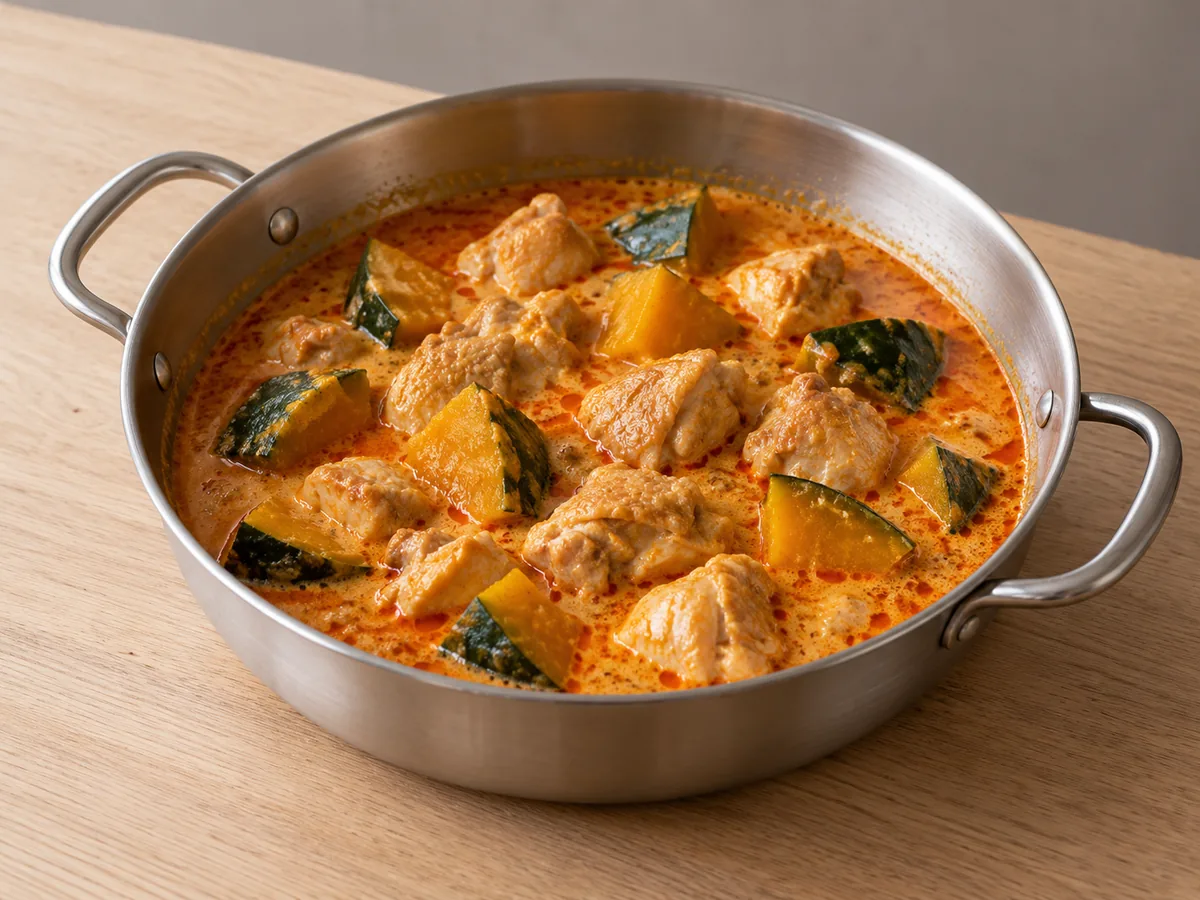
Thai red coconut curry with chicken thigh, sweet kabocha squash and Thai basil, accompanied by jasmine rice. A home adaptation using prepared red curry paste, light brown sugar and water.
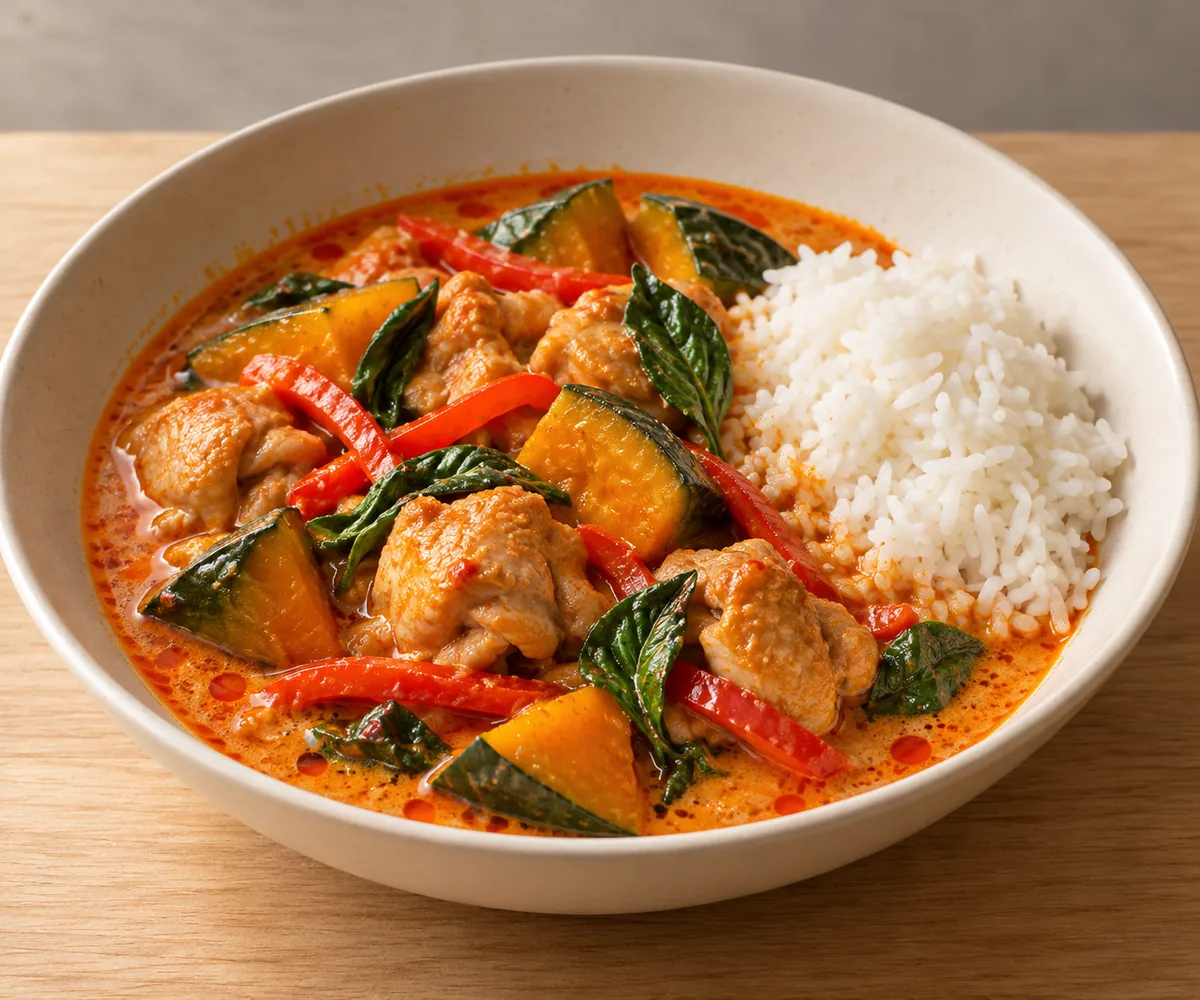
A relaxed evening deserves a curry with a little theatre: red coconut oil glinting around sweet squash, tender chicken and fragrant Thai basil. This Thai home-style red curry keeps the coconut-reduction technique while using ready-made red curry paste. Light brown sugar replaces palm sugar and water replaces stock in this practical home adaptation—big aroma, no all-evening project.
- Prep
- 20 min
- Cook
- 30 min
- Total
- 50 min
- Difficulty
- Medium
Ingredients
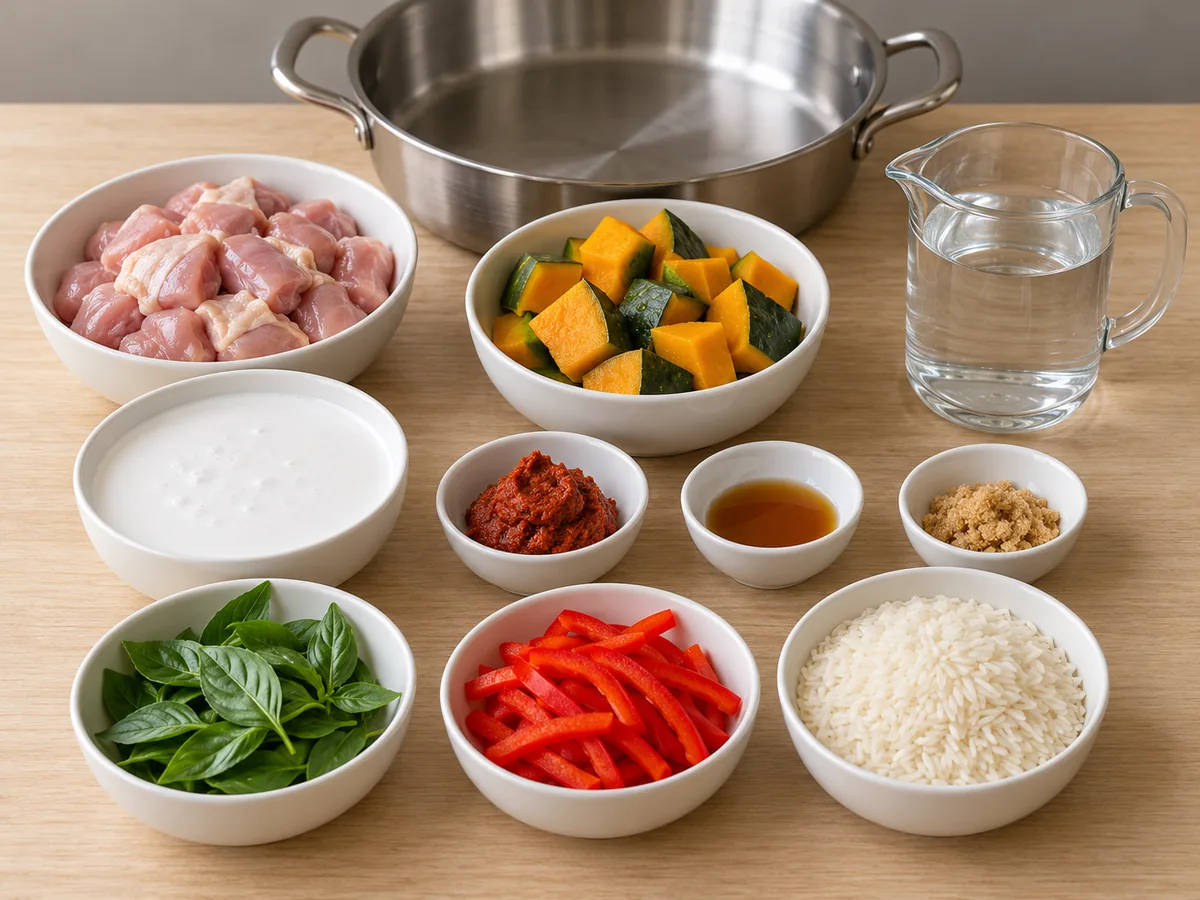
Method
Prepare the ingredients
Wash the squash, remove seeds and woody skin blemishes, then cut into 2 cm chunks. Thinly slice the pepper and pick the basil leaves. Cut chicken into 3 cm pieces on a separate board; do not rinse raw chicken. Wash hands, board and knife before handling other ingredients. Use a 24 cm deep saute pan for two servings; a larger pan suits four.
Start the jasmine rice
Rinse the rice in cold tap water until less cloudy, then drain thoroughly. Put in a small saucepan with a close-fitting lid, adding 105 ml of the measured water per serving: 105, 210, 315 or 420 ml for 1, 2, 3 or 4 servings. Bring to a gentle simmer, cover and cook on very low heat for about 18–20 minutes, until the water is absorbed. Turn off the heat and leave covered for 5 minutes. Cook the curry meanwhile.
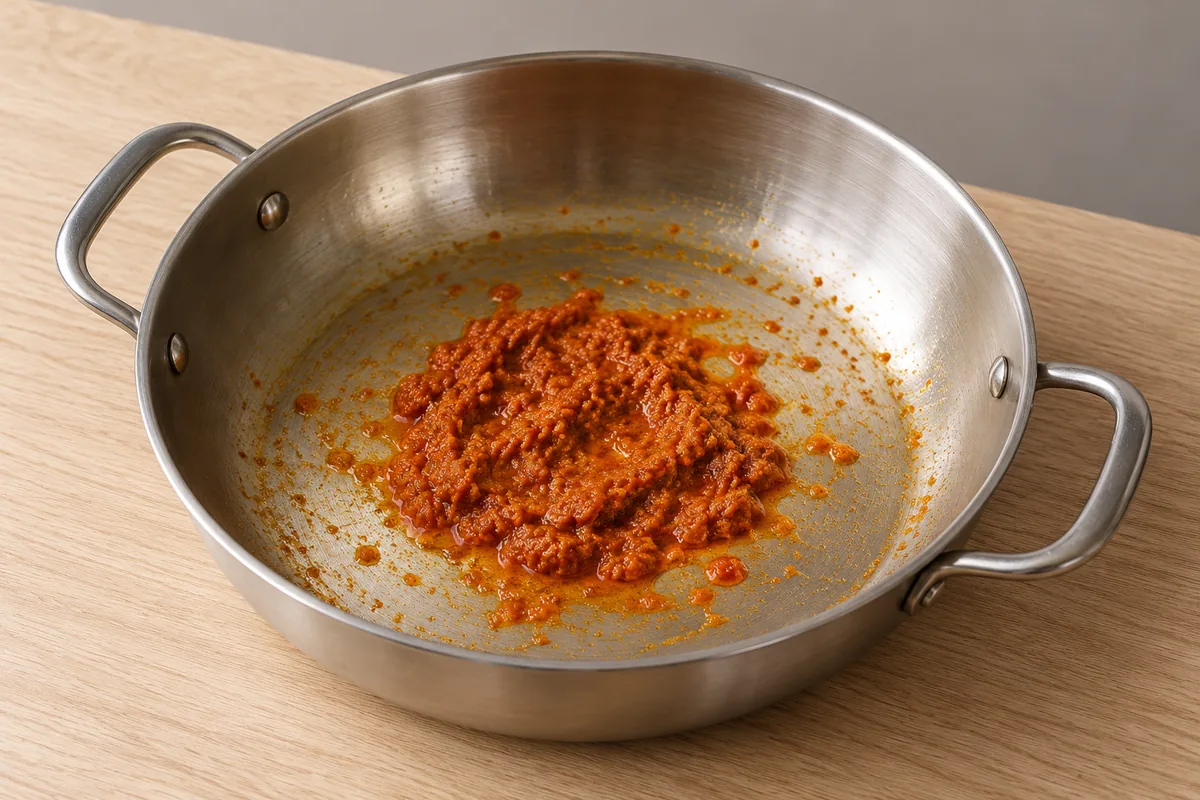
Concentrate the curry paste
Put one third of the coconut milk in the saute pan: 40, 80, 120 or 160 ml for 1, 2, 3 or 4 servings. Bring to a simmer over medium heat, stir in the red curry paste and cook for 4–6 minutes, stirring often, until thick and fragrant. Small glossy oil droplets may appear; if the paste is thick but the milk does not separate, continue without waiting for oil.
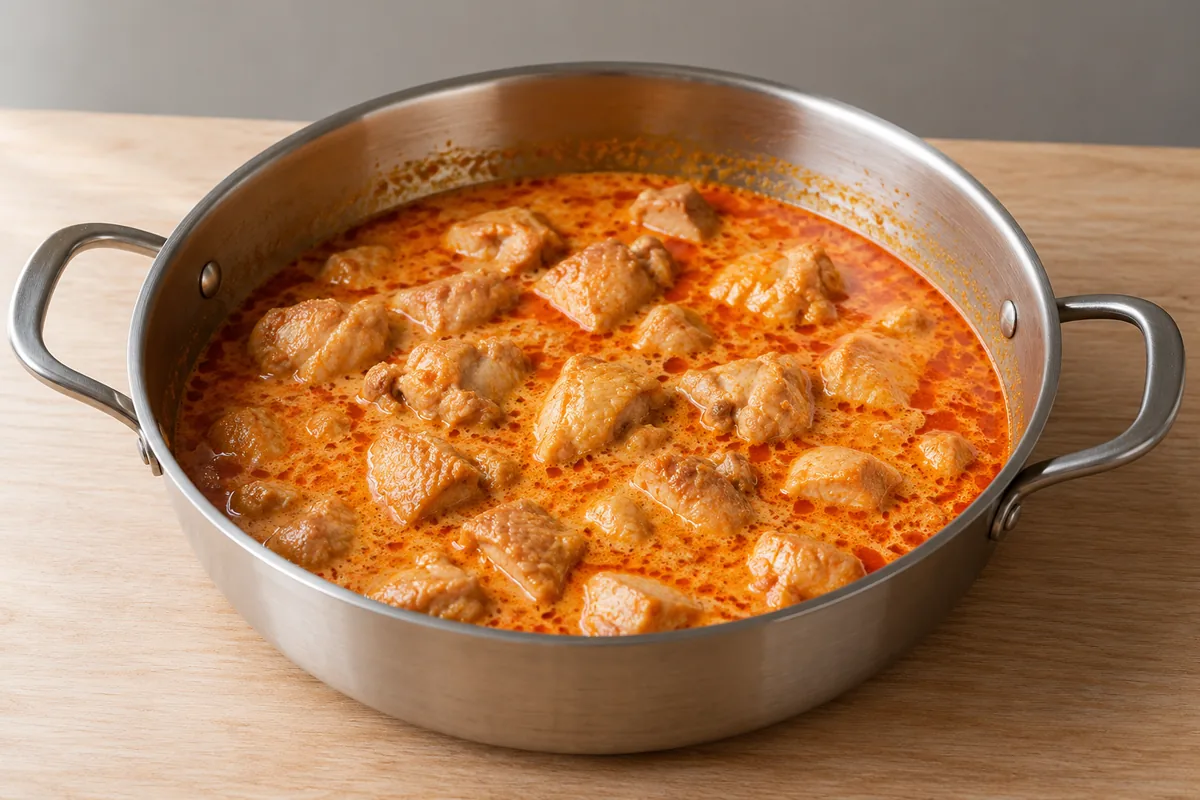
AI-generated illustration. Simmer the chicken
Stir in the chicken to coat with paste. Add the remaining coconut milk and the reserved curry water: 60, 120, 180 or 240 ml for 1, 2, 3 or 4 servings. Stir in the sugar and half the measured fish sauce. Bring to a gentle simmer and cook uncovered for 8 minutes, stirring occasionally. The squash, pepper and basil are not added yet.
AI-generated illustration. Tenderize the squash
Add the squash and simmer gently for 8–12 minutes, stirring carefully, until a fork passes easily through a chunk but it still holds its shape. Check the centre of the largest chicken pieces with a food thermometer: they must reach at least 74°C. Continue cooking if necessary. Avoid a hard boil that breaks up the squash.
AI-generated illustration. Finish and serve
Turn off the heat. Taste, then add as much of the reserved fish sauce as needed; salty curry paste may need none. Gently fold in the basil and pepper strips so the leaves wilt in the residual heat. Fluff the rice and divide between individual bowls, spooning the chicken, squash and curry alongside the rice in each bowl. Serve immediately.
Good to know
- Keep stirring as the coconut milk concentrates. If the paste starts catching, lower the heat rather than letting it darken or scorch.
- Cut squash chunks evenly and test early. Kabocha should be creamy inside but still intact, not collapsing into the sauce.
- Reserve half the fish sauce until the chicken is cooked. Curry pastes differ in saltiness, so taste before adding the rest.
- If the rice is still firm after the water is absorbed, add a small splash of hot water and cover over low heat for a few more minutes.
Comments 0
Comments here come from signed-in readers only.Loading comments…