Swedish-Inspired Salmon with Creamy Dill Cabbage
An original Swedish-inspired keto main of pan-seared salmon and tender cabbage in a lemon-and-dill cream sauce. This is a home-kitchen adaptation, not a traditional named Swedish dish.
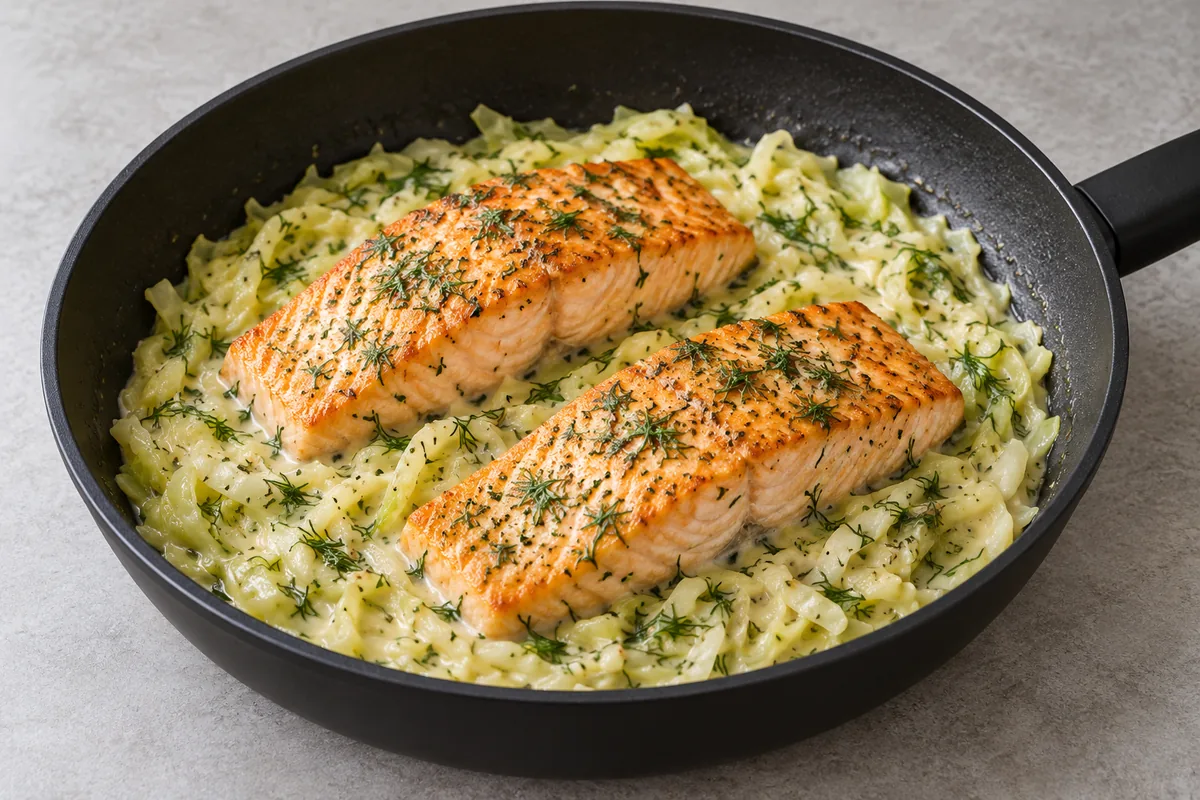
Golden salmon, silky cabbage and a bright flutter of dill: a little Nordic comfort without a mountain of washing-up. This original keto adaptation takes its flavour inspiration from Swedish salmon dishes with dill and creamy accompaniments; it is not a traditional named recipe. The cabbage does the substantial work here, with lemon keeping the richness lively.
- Prep
- 10 min
- Cook
- 25 min
- Total
- 35 min
- Difficulty
- Easy
Ingredients
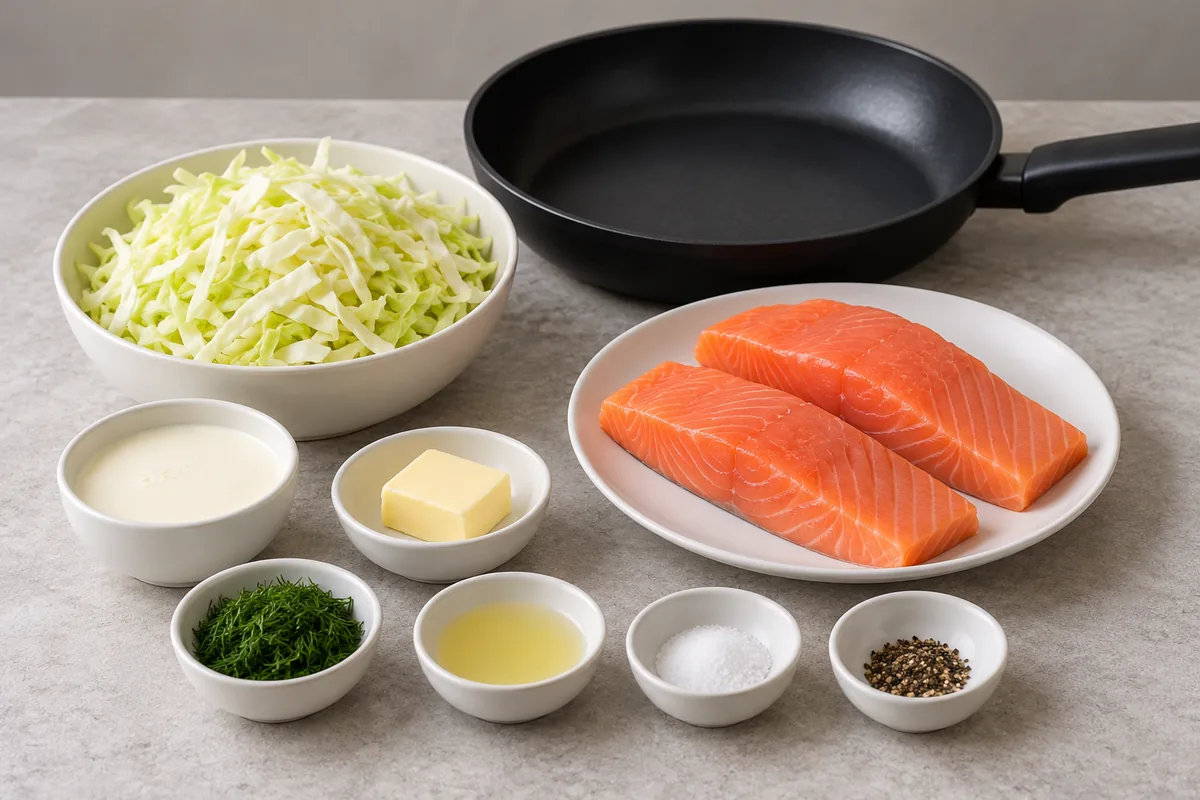
Our chef creates these recipes to meet our keto rule: no more than 10 g net carbohydrates per serving. Nutrition values are not yet calculated or independently verified. Calculated nutrition and verified diet labels will follow.
Method
Prepare and season
Use the quantities for your chosen serving count; the photographs show two servings. Slice the cabbage into ribbons about 5 mm wide and chop the dill. Pat the salmon dry and season it with half the salt and pepper. Keep raw fish separate from the vegetables, wash hands and clean any utensils or surfaces that touched it. Use a 26 cm non-stick frying pan for two servings; for three or four, use two pans in parallel and divide all ingredients equally between them.
Brown the salmon
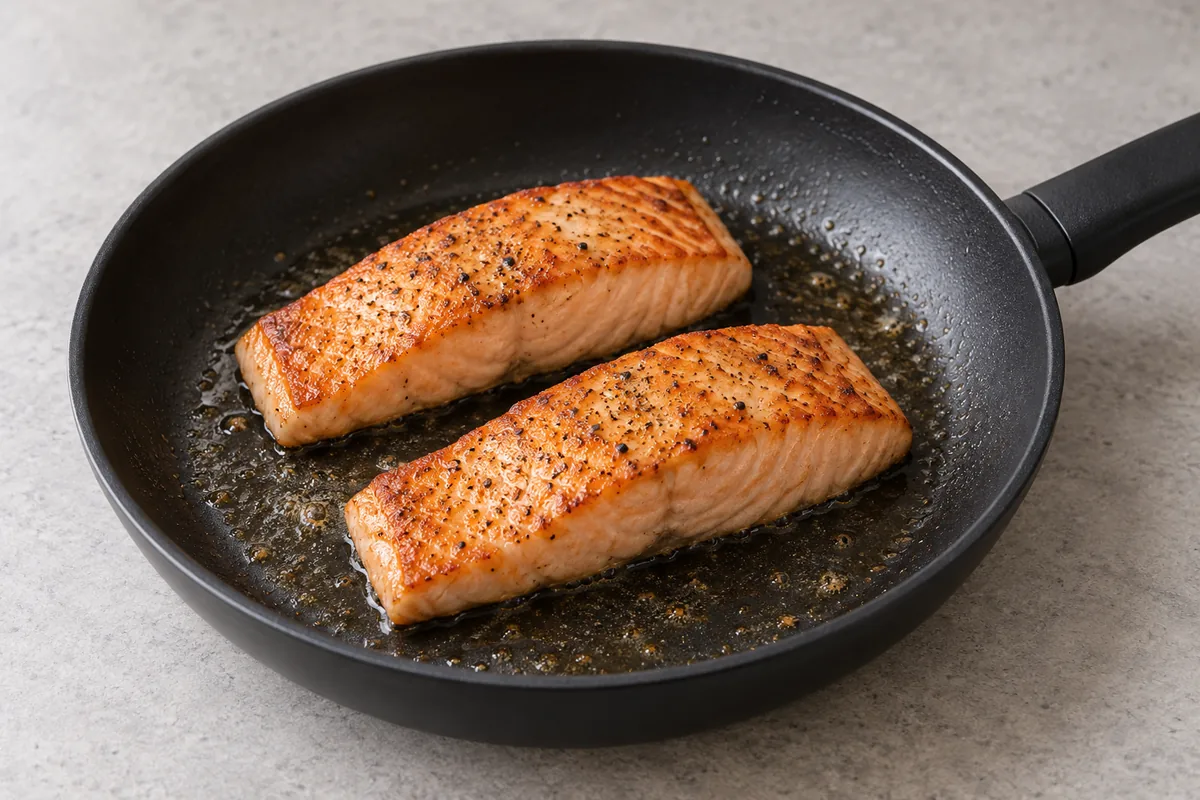
Melt half the butter in the pan over medium heat until foaming, without letting it darken. Add the salmon presentation-side down and leave undisturbed for 4–5 minutes. Turn carefully and cook for another 3–5 minutes, lowering the heat if the butter browns too quickly. Check the thickest part with a food thermometer: it must reach 63°C. Thickness affects timing, so extend cooking if needed. The fillets should have golden tops and opaque sides; the photo shows them just before removal. Transfer to a clean plate, not the plate used for raw fish.
AI-generated illustration. Soften the cabbage
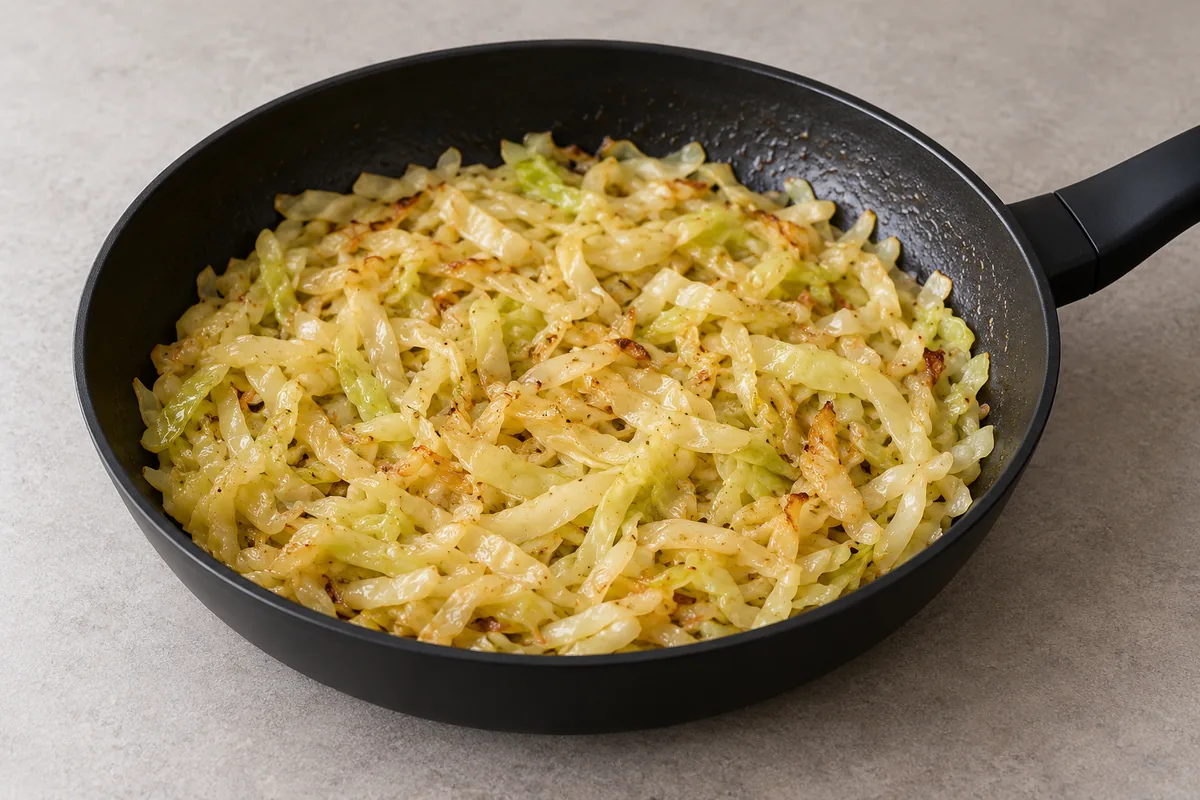
Add the remaining butter and the cabbage to the same pan, followed by the remaining salt and pepper. Cook over medium heat for 8–10 minutes, stirring and lifting the ribbons regularly, until tender with a few lightly golden edges. The cabbage should be glossy rather than swimming in liquid. If the pan becomes too hot, reduce the heat rather than adding more fat.
AI-generated illustration. Make it creamy
Reduce the heat to medium-low and pour in the cream. Scrape up the golden pan juices with a silicone or wooden spatula. Simmer gently for 2–3 minutes, stirring, until the cream coats the cabbage and leaves a brief trail when the spatula crosses the pan. Do not boil hard or reduce until dry.
Finish with dill
Turn the heat to low. Stir the lemon juice and half the chopped dill into the creamy cabbage, then set the cooked salmon on top with any juices from its clean resting plate. Warm gently for about 1 minute without boiling. Turn off the heat, scatter the remaining chopped dill over the fish and cabbage, and divide evenly among the servings.
Good to know
- Dry the salmon thoroughly and leave space between the fillets. A wet surface or crowded pan makes the fish steam instead of developing a golden crust.
- Slice the cabbage evenly and remove the thick core before weighing. Thick chunks stay crunchy after the finer ribbons have softened.
- Keep the cream at a gentle simmer and add the lemon juice only after lowering the heat. Hard boiling after the acid is added can make the sauce look grainy.